


On the Radar: Historic Middle East Conflicts and Their Impacts on Canadian Interest Rates
- Economic insights
- Mar 6, 2026
- First National Financial LP
Quick Takes:
- Prolonged oil shortages in the 1970s let inflation increase and forced the Bank of Canada to push rates toward twenty percent.
- The swift price spike of the 1990 Gulf War faded within months and the Bank moved from double digit interest rates to mid single digits as recession pressures took hold.
- The June 2025 Israeli and American strikes on Iran’s nuclear facilities briefly lifted Brent from the mid US$60s to the low US$70s, but a ceasefire within days let oil retreat and the Bank of Canada continued cutting rates through the autumn.
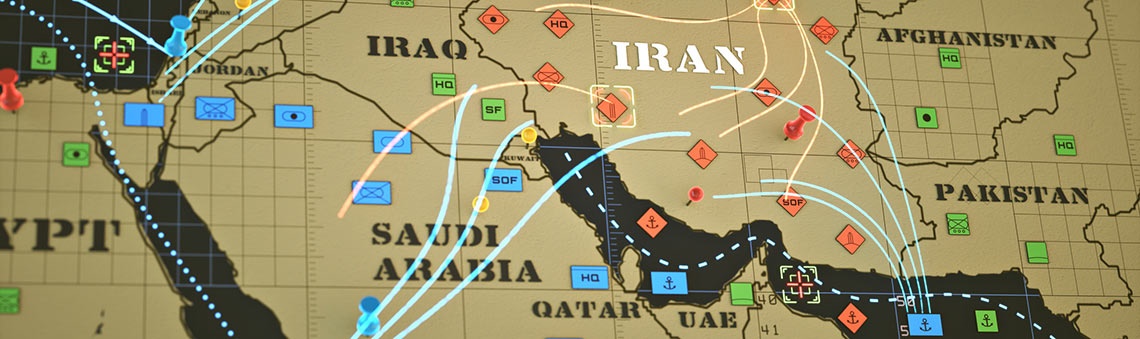
- The February 2026 escalation and partial closure of the Strait of Hormuz has pushed Brent above US$80 and threatens to reignite inflation just as U.S. tariffs are already dragging on Canadian growth, presenting the Bank with its most difficult two front policy challenge since the 1970s.
Energy crises rarely begin in Ottawa, yet their aftershocks shape every decision at the Bank of Canada. Since the 1973 oil embargo, each major conflict in the Middle East has lifted crude prices, nudged Canadian inflation off target, and forced policymakers to balance price stability with growth. This blog starts with the 1973 embargo and the 1990 Gulf War, then looks through the twenty first century shocks that occurred under Canada’s formal inflation target. For every episode we measure the jump in oil prices, the reaction of consumer prices, and the adjustments in policy and market interest rates. We close with the two rounds of strikes on Iran in 2025 and 2026 and the Strait of Hormuz crisis that followed, asking what a sustained move in Brent above US$80 would mean for Canadian rates when the economy is already reeling from a trade war with the United States. History offers no script, but it does provide clear markers that help us chart the likely course ahead.
1973 Oil Crisis and 1970s Stagflation
Conflict and Oil Shock: The 1973 Yom Kippur War triggered an Arab oil embargo. OPEC cut output and blocked exports to nations backing Israel, pushing crude from about US$3 to US$12 in months. Arab producers cut output about 5 to 10 percent and shipments to embargoed countries. A second shock followed in 1979 to 1980 as the Iranian Revolution and the Iran Iraq War lifted prices from US$14 to about US$35.
Inflation Impact: Energy costs drove Canadian CPI to an average above 7 percent in the decade and a peak near 13 percent in 1974 while growth stalled. Early rate cuts by several central banks worsened the surge.
Interest Rate Response: Once inflation proved sticky, the Bank of Canada and the Federal Reserve tightened forcefully. The Canadian policy rate rose from below 10 percent early in the decade to nearly 20 percent in 1981, a move that triggered a deep recession but restored price stability.
Bond Yields and Expectations: Government of Canada 10 year yields tracked inflation, moving from single digits before 1973 to well above 10 percent by the early 1980s as investors demanded an inflation risk premium. Governor Tiff Macklem later noted that delaying action in the 1970s forced steeper hikes and a sharper slowdown.
1990 Gulf War Oil Shock
Conflict and Oil Shock: In August 1990 Iraq invaded Kuwait, threatening a large share of world crude. Prices climbed from about US$15 to US$30 by autumn and briefly topped US$40 in mid October as supply fears intensified. The United States led coalition ended the war by February 1991 and released reserves, pulling Brent back below US$20 by mid 1991.
Inflation and Growth Impact: Canadian CPI hovered near 5 percent in 1990 and rose further on higher gasoline and heating costs. The shock dented confidence and helped push Canada into the 1990 to 1991 recession. With demand collapsing, CPI fell below 2 percent by 1992. BMO later noted headline inflation was lower two years after the shock began, showing how a deep slowdown can erase a supply driven price spike.
Interest Rate Response: Governor John Crow kept the Bank Rate in the low double digits through mid 1990 to anchor expectations, and it peaked near 16 percent in February 1991. As the war ended and the economy contracted, the Bank cut rates sharply through 1991 and 1992. By late 1992 the overnight rate sat in the mid single digits, mirroring similar Fed cuts.
Bond Yields and Market Reaction: Investors initially fled to safety, trimming U.S. Treasury yields, while Canadian bond yields stayed high because of domestic inflation and heavy borrowing. After inflation eased and policy rates fell, ten year Canada yields dropped several percentage points from 1990 peaks. The episode featured a brief spike in short term rates followed by a swift decline and a delayed fall in long term yields as disinflation took hold.
Early 2000s Conflicts: 9/11 Aftermath and the 2003 Iraq War
Conflict and Oil Shock: After the September 11 2001 attacks the United States invaded Afghanistan in 2001 and Iraq in 2003. In the months before the Iraq campaign crude climbed from about US$25 to US$35 to US$40 as a war premium grew. The Bank of Canada warned that a wider conflict could push oil above US$50 and lift global CPI. Major combat lasted only six weeks and Iraqi output resumed quickly. Brent fell back to the low US$30s by late April so the spike proved brief and no lasting shortage emerged.
Inflation and Growth Impact: The jump in pump prices lifted Canadian headline CPI above 3 percent for a few months in early 2003, yet core inflation stayed near 2 percent and slack remained. Global growth was weak after the tech bust and the Bank noted that a longer war could damage confidence. Canada’s GDP slowed in the first half of 2003, worsened by SARS, but growth rebounded in 2004 as oil retreated.
Interest Rate Response: Balancing higher CPI and soft demand, the Bank raised the overnight rate twice to 3.25 percent by March 2003. When oil steadied it cut the rate back to 2.75 percent by July, stating that inflation would return to 2 percent within two years and that temporary oil swings would be ignored. Markets agreed: short rates fell after April and ten year Canada yields drifted lower through late 2003 as investors priced in weaker growth and further easing.
2011 Arab Spring and Libyan Civil War
Conflict and Oil Shock: Unrest in North Africa and the Middle East cut Libyan output by roughly 1.5 million barrels a day in early 2011. Brent crude jumped from the low US$80s at end 2010 to more than US$120 by April 2011. The Bank of Canada observed record commodity prices. As other producers filled the gap and European debt worries curbed demand, Brent eased toward US$100 by late 2011.
Inflation Impact: Headline CPI averaged 3.3 percent in the second quarter, up from about 2 percent a year earlier. Gasoline prices rose more than 20 percent year on year, lifting transport and food costs. A strong Canadian dollar near parity blunted some import inflation, and slack in the economy limited wage pass through. By 2012 CPI fell back below 2 percent.
Interest Rate Response: The Bank of Canada held the overnight rate at 1.00 percent all year, judging the oil driven rise in inflation transitory and citing global risks from Middle East turmoil, the Japanese earthquake, and the Eurozone crisis. Core inflation stayed near 2 percent. Five year Canada yields climbed near 3 percent in April on rate hike bets, then sank near 1.5 percent by December as growth fears mounted. Analysts praised the Bank’s steady guidance for keeping inflation expectations anchored.
2023 Israel Hamas War
Conflict and Oil Shock: Fighting that began on 7 October 2023 lifted Brent crude from about US$85 to roughly US$92 within days, while Canadian pump prices ticked higher. Because neither Israel nor Gaza supplies oil, the move reflected a risk premium tied to fears Iran or key shipping lanes might be drawn in. As the war stayed contained, Saudi supply rose and by late October Brent had slipped back to its prior level.
Market Interest Rates: The first reaction was a risk off bid for safe assets that trimmed Canadian ten year yields from just over 4 percent. Once crude retreated and broader growth data reasserted themselves, yields climbed again, finishing 2023 at multi year highs. Equities showed a brief pullback that faded quickly, and analysts at RBC noted global risk aversion dissipated within weeks.
Bank of Canada Policy: The Bank held its policy rate at 5.00 percent in October and December, citing the conflict as a modest upside risk to inflation through energy prices and a mild downside risk to growth through confidence. October’s Monetary Policy Report nudged near term CPI forecasts higher but Governor Macklem said the Bank would not react to temporary price swings. Headline inflation fell to 3.1 percent in October and was projected near 2 percent by mid 2024, allowing the Bank to pause further hikes while monitoring any broadening of the conflict.
2025 Israeli and American Strikes on Iran
Conflict and Oil Shock: The fears that simmered during the 2023 Hamas war became reality in June 2025. On 13 June, Israel launched air strikes against Iran’s nuclear facilities at Natanz, Esfahan, and Arak, reportedly killing more than a dozen senior nuclear scientists. Nine days later the United States struck the Fordow, Natanz, and Isfahan complexes with bunker buster bombs and cruise missiles. Iran fired ballistic missiles at Al Udeid Air Base in Qatar on 23 June, but President Trump announced a ceasefire on 24 June. Brent crude, which had been trading near US$65 in early June, rallied to the low US$70s on the strikes but pulled back once the ceasefire held and no sustained disruption to Iranian exports materialized.
Inflation and Growth Impact: Canadian headline CPI was already near 2 percent when the strikes occurred. The brief oil spike added only a few cents to gasoline prices and washed out within weeks. Far more consequential for the economy was the trade war with the United States. Washington announced 25 percent tariffs on most Canadian goods in February 2025 and put them into effect on 4 March, with energy exports taxed at 10 percent. Canadian goods exports to the United States fell sharply, manufacturing shed tens of thousands of jobs, and the Bank of Canada estimated that tariffs alone could shave roughly 2.5 percentage points off annual GDP growth in the first year. The economy shrank 0.6 percent in the fourth quarter of 2025, capping the weakest full year of growth since 2016.
Interest Rate Response: The Bank of Canada had been cutting rates steadily since June 2024. It entered 2025 at 3.25 percent and reduced the overnight rate to 3 percent in January and 2.75 percent in March. It paused in April to assess the tariff shock, held again in June and July, then resumed cutting to 2.5 percent in September and 2.25 percent in October. The December 2025 and January 2026 meetings held the rate at 2.25 percent. The pattern echoed the shorter lived shocks of 2003 and 2011: a brief geopolitical spike in oil was not enough to derail easing when core inflation stayed anchored and the domestic economy was weakening for other reasons.
Bond Yields and Market Reaction: Ten year Government of Canada yields, which had started 2025 above 3.4 percent, drifted lower through the year as growth slowed and rate cuts continued, falling below 3.2 percent by early 2026. The June strikes barely registered in bond markets because the ceasefire came so quickly. Investors were far more focused on trade policy and the risk of a made in Canada recession.
2026 Escalation and the Strait of Hormuz Crisis
Conflict and Oil Shock: On 28 February 2026, the United States and Israel launched a second and far larger campaign against Iran. Strikes killed Supreme Leader Ali Khamenei and targeted military commanders, IRGC facilities, and remaining nuclear infrastructure. Iran retaliated with missile and drone attacks on Israeli territory and U.S. bases in the Gulf. The Islamic Revolutionary Guard Corps warned it would set fire to any vessel transiting the Strait of Hormuz, and tanker traffic through the strait dropped to near zero within days. More than 14 million barrels a day, roughly a third of global seaborne crude exports, normally pass through Hormuz. Brent surged from about US$70 to above US$84 within the first week of March 2026. Dutch natural gas prices spiked nearly 50 percent after Iran struck Qatar’s Ras Laffan LNG facility. President Trump ordered the U.S. Navy to escort tankers and the Development Finance Corporation to provide political risk insurance for Gulf shipping, but the situation remained fluid at the time of writing.
Inflation and Growth Risks: This is the scenario that earlier versions of this article warned about. The Bank of Canada’s own modelling suggests every US$10 increase in Brent adds roughly 0.4 percentage point to Canadian CPI over a year. If oil settles near US$85 that implies about half a point of additional inflation. If the strait stays closed and Brent reaches triple digits, the inflationary impulse would be closer to a full percentage point on top of the 2.3 percent reading in January 2026. At the same time, the economy is already absorbing the drag from U.S. tariffs, with GDP contracting in late 2025 and the unemployment rate at 6.8 percent in December. Higher energy costs would act as a further tax on consumers and businesses, deepening the slowdown.
Bank of Canada Policy Outlook: The Bank faces its most difficult two front challenge since the 1970s: an energy supply shock pushing prices up while a trade war pulls demand down. Governor Macklem has consistently said the Bank will not react to temporary oil swings, and the next scheduled rate announcement is 18 March 2026. If the Hormuz disruption proves brief, perhaps resolved by a naval escort regime or a diplomatic settlement, history suggests oil retreats, headline inflation settles, and the Bank can resume easing to support a weakened economy. That is the pattern of 1991, 2003, 2011, and June 2025. But if the strait stays closed for weeks or months and Brent pushes well above US$100, the Bank may have no choice but to pause or even tighten, exactly as it did in the late 1970s when persistent supply losses let inflation expectations drift out of control.
Bond Yields and Market Reaction: Ten year Canada yields fell to a three month low of 3.16 percent in late February as weak GDP data stoked expectations of further easing. The early March escalation initially deepened that flight to safety, but if energy driven inflation picks up, the bond market could reverse course and demand a higher risk premium, pushing yields back up. Equity markets sold off on the Hormuz headlines while energy stocks rallied. The Canadian dollar weakened against the U.S. dollar, reflecting both the growth shock and Canada’s status as a net energy exporter whose crude is landlocked and therefore does not benefit directly from higher global tanker rates.
Lessons and What to Watch
Six decades of Middle East conflicts offer a consistent framework. When oil shocks are short and contained, headline inflation spikes briefly, core inflation stays anchored, and central banks either hold steady or continue easing. When disruptions drag on, inflation expectations rise, wages follow, and policymakers are forced into painful tightening. Duration, not the size of the initial price jump, is what separates a bump from a crisis.
The current moment is unusually complex because the Bank of Canada is fighting on two fronts. U.S. tariffs are sapping demand and threatening recession, which argues for lower rates. A possible sustained closure of the Strait of Hormuz is threatening to push energy costs sharply higher, which argues for holding or raising rates. That combination is stagflationary, and it echoes the 1970s more closely than any episode since.
Two indicators will determine the path from here. First, the duration of the Hormuz disruption: if tanker traffic resumes within weeks, oil should pull back toward the mid US$70s and the Bank can ease. Second, core inflation: as long as measures like CPI trim and median stay near 2.5 percent, the Bank has room to look through headline noise. History says the most likely outcome is a brief disruption followed by a return to easing. But the tail risk of a prolonged shutdown is real, and in that scenario the parallels to the 1970s become uncomfortably close.